
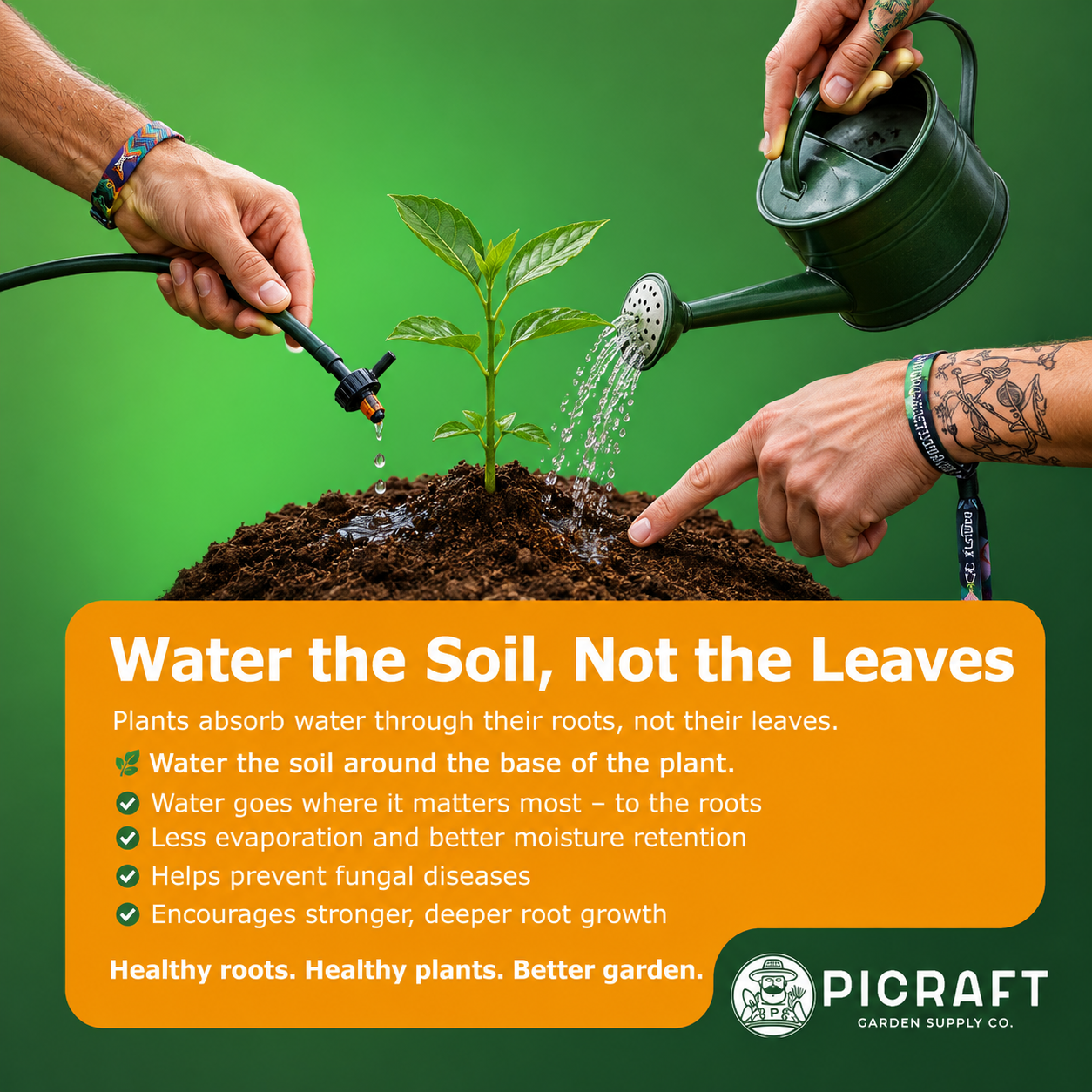
Why Professional Gardeners Water the Root Zone Instead of the Plant
When watering the garden, most people naturally aim the hose or watering can at the leaves.
After all, the plant is what we can see.
But professional gardeners take a completely different approach.
Instead of watering the plant itself, they water the soil around it.
Why?
Because plants don't absorb water through their leaves—they absorb it through their roots.
Understanding this simple principle can dramatically improve plant health while reducing water consumption and maintenance.
How Plants Actually Absorb Water
Many people assume that if the leaves are wet, the plant has been watered.
In reality, that's not how plants work.
The vast majority of water enters a plant through its root system.
Tiny root hairs absorb moisture from the surrounding soil before transporting it throughout the entire plant.
This water is then used for:
-
transporting nutrients
-
photosynthesis
-
cell growth
-
cooling the plant
-
producing flowers and fruit
Without moisture in the root zone, even a plant with wet leaves can still become dehydrated.
Why Watering Leaves Is Less Effective
Spraying water over leaves may make a garden look refreshed, but much of that water never reaches the roots.
Instead, it is often lost through evaporation—especially on warm or windy days.
Surface watering can also create other problems:
-
water evaporates before soaking into the soil
-
roots receive less moisture
-
watering becomes less efficient
-
more frequent watering is required
-
foliage may remain damp for long periods, encouraging some fungal diseases
That's why watering leaves should never be the main objective.
The Root Zone Is Where Water Matters Most
The root zone is the area of soil surrounding a plant's roots.
This is where water should be delivered.
When moisture reaches the root zone:
-
roots absorb water more efficiently
-
plants remain hydrated for longer
-
nutrients move more easily through the soil
-
root systems develop deeper and stronger
Professional gardeners think less about watering plants and more about maintaining consistent soil moisture.
Deep Watering Creates Stronger Plants
Applying water slowly to the soil encourages it to soak deeper below the surface.
As moisture moves down, roots naturally grow towards it.
This creates plants that are:
-
stronger
-
healthier
-
more drought tolerant
-
less dependent on daily watering
Shallow watering has the opposite effect, encouraging roots to remain near the surface where the soil dries out quickly.
Drip Irrigation Delivers Water Exactly Where It's Needed
One of the biggest advantages of a drip irrigation system is precision.
Instead of spraying large areas, drip irrigation delivers water directly into the soil around each plant.
Benefits include:
-
reduced evaporation
-
lower water bills
-
healthier root systems
-
less runoff
-
minimal water waste
-
improved plant growth
For most home gardens, a system built around 16mm LDPE mainline irrigation pipe, drippers and spray misters provides one of the most efficient watering solutions available.
When Is the Best Time to Water?
Even if you're watering the soil correctly, timing still matters.
The best times to water are:
🌅 Early morning
or
🌇 Early evening
These cooler parts of the day allow more water to soak into the soil before it evaporates.
Avoid watering during the hottest part of the afternoon whenever possible.
Signs You're Watering Correctly
You're likely watering effectively if:
-
the soil remains moist below the surface
-
roots grow deeper over time
-
plants stay healthy during warm weather
-
leaves remain firm and green
-
watering is needed less frequently
Healthy gardens don't require constant watering—they require smart watering.
Common Watering Mistakes
Avoid these common errors:
❌ Spraying leaves instead of the soil
❌ Watering little and often
❌ Watering during the hottest part of the day
❌ Allowing water to run off before it soaks in
❌ Forgetting that roots—not leaves—need moisture
Small improvements to your watering technique can make a significant difference to plant health.
Key Takeaways
Successful irrigation isn't about getting the plant wet.
It's about delivering water exactly where plants can use it.
Remember:
-
Water the soil, not the leaves.
-
Aim for the root zone.
-
Water deeply rather than frequently.
-
Encourage deeper root growth.
-
Consider drip irrigation for greater efficiency.
By focusing on the roots instead of the foliage, you'll create healthier plants, reduce water waste and build a more resilient garden.
Frequently Asked Questions
Do plants absorb water through their leaves?
No. Most plants absorb almost all of their water through their roots. Leaves play an important role in photosynthesis, but they are not the primary way plants take in water.
Is watering leaves bad for plants?
Not always, but it is generally less efficient. Watering the soil around the base of the plant is far more effective because it delivers moisture directly to the roots.
Why should I water the soil instead of the leaves?
Watering the soil reduces evaporation, improves water efficiency and encourages healthier root development.
Does drip irrigation water the leaves?
No. Drip irrigation is designed to deliver water directly into the root zone, making it one of the most efficient watering methods for gardens.
What is the best way to water a garden?
For most gardens, the best approach is to water deeply, directly into the soil around the roots, ideally using a watering can, soaker hose or drip irrigation system.
Continue Learning with Picraft Garden Academy
This article is part of the Picraft Garden Academy, our educational series helping gardeners understand irrigation, improve plant health and make smarter watering decisions.