
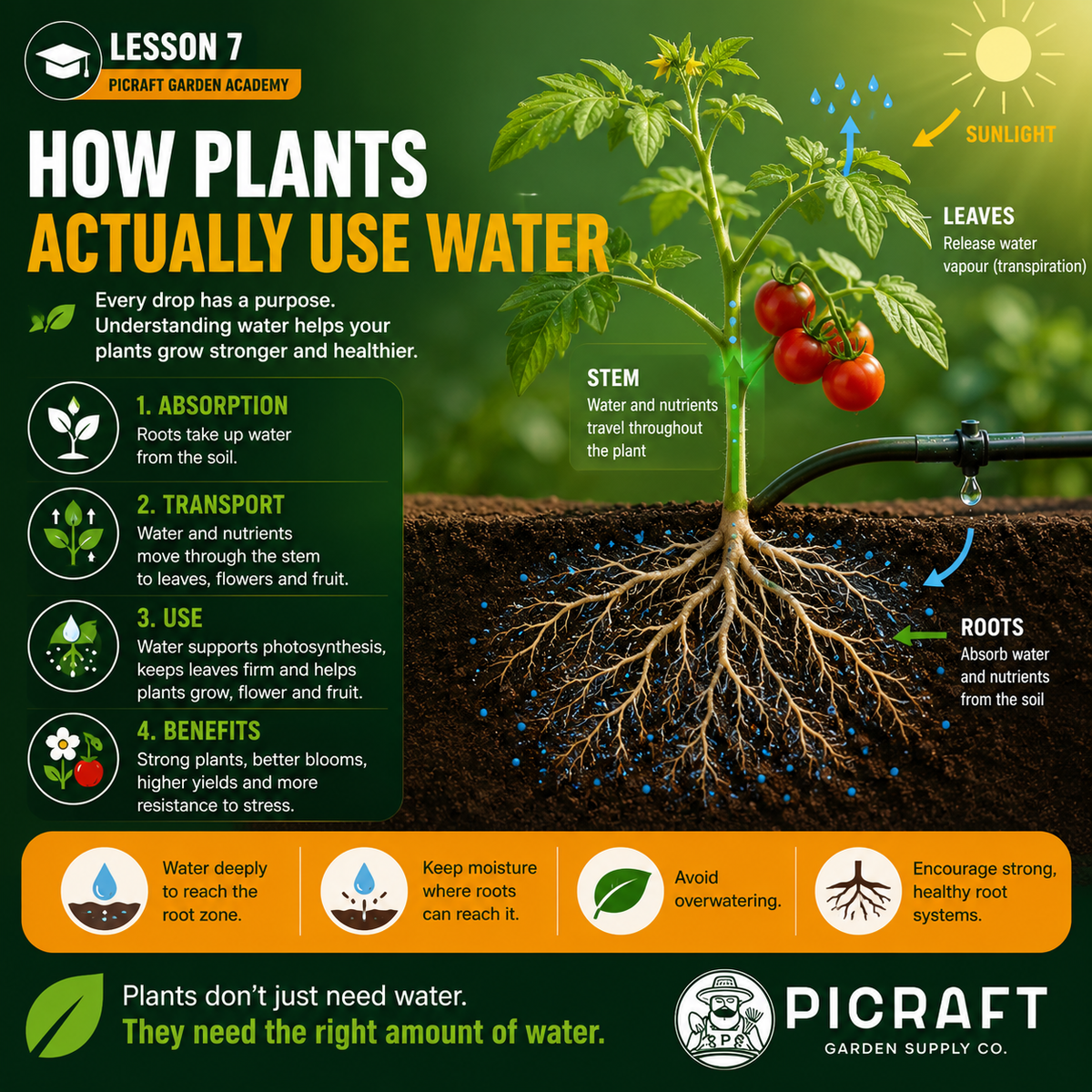
Understanding the Journey of Water Through a Plant
Water is one of the most important resources for every plant, yet many gardeners never stop to consider what actually happens after they water their garden.
Does the water simply keep the soil wet?
Does it soak into the roots and stay there?
Or is there something much more complex happening beneath the surface?
The truth is that every drop of water begins an incredible journey through the plant, supporting almost every biological process required for healthy growth.
Understanding how plants use water will help you water more effectively, grow healthier plants and avoid many of the common mistakes that lead to poor garden performance.
Step 1 – Roots Absorb Water from the Soil
Everything begins underground.
Tiny root hairs absorb water from small pockets of moisture surrounding the roots.
These microscopic structures dramatically increase the root's surface area, allowing plants to collect both water and dissolved nutrients from the soil.
Without healthy roots, even the most carefully watered plant will struggle to survive.
This is why successful irrigation always focuses on keeping moisture in the root zone, not on wetting the leaves.
Step 2 – Water Travels Through the Plant
Once absorbed, water moves upward through specialised tubes called xylem.
These natural pipelines transport water from the roots to every part of the plant.
As the water travels, it carries essential nutrients that plants need for healthy growth, including:
-
nitrogen
-
phosphorus
-
potassium
-
calcium
-
magnesium
-
trace minerals
Without water, these nutrients cannot move efficiently from the soil into plant tissues.
Step 3 – Water Powers Photosynthesis
Photosynthesis is the process that allows plants to convert sunlight into energy.
Water is one of the key ingredients in this process.
Combined with carbon dioxide from the air and sunlight, water enables plants to produce sugars that fuel:
-
new leaves
-
flowers
-
fruit
-
roots
-
stems
Without enough water, photosynthesis slows dramatically, reducing plant growth and overall health.
Step 4 – Water Keeps Plants Strong
Healthy plants stay upright because their cells remain full of water.
This internal pressure, known as turgor pressure, keeps leaves firm and stems strong.
When water becomes unavailable:
-
leaves begin to wilt
-
stems lose rigidity
-
flowers droop
-
growth slows
Wilting is often the plant's first visible warning that it cannot maintain enough internal water pressure.
Step 5 – Water Helps Plants Stay Cool
Plants lose water through tiny openings on their leaves called stomata.
This process is known as transpiration.
Although it may sound wasteful, transpiration performs an essential function.
It cools the plant in much the same way that perspiration cools the human body.
As water evaporates from the leaves, more water is pulled upward from the roots, creating a continuous flow throughout the plant.
Why Too Much Water Can Be Harmful
Many gardeners believe that more water always means healthier plants.
In reality, plants need the right amount of water—not the maximum amount.
When soil remains constantly saturated:
-
roots receive less oxygen
-
nutrient uptake becomes less efficient
-
root diseases become more likely
-
plant growth slows
Healthy roots require both moisture and oxygen.
Successful irrigation maintains the correct balance between the two.
Why Too Little Water Is Also a Problem
When water becomes scarce:
-
nutrient transport slows
-
photosynthesis decreases
-
leaves wilt
-
flowering declines
-
fruit production is reduced
-
plants experience drought stress
Prolonged water shortages can permanently damage plant growth.
The goal is not to keep soil permanently wet, but to maintain consistent moisture where roots can access it.
How Drip Irrigation Supports Natural Plant Processes
A properly designed drip irrigation system works with the natural biology of plants.
Instead of spraying water over leaves, drip irrigation delivers moisture directly into the root zone.
Benefits include:
-
consistent soil moisture
-
healthier root development
-
reduced evaporation
-
more efficient nutrient uptake
-
lower water consumption
-
healthier plants throughout the growing season
Using 16mm LDPE mainline irrigation pipe, drippers and micro sprinklers allows gardeners to provide water exactly where plants need it most.
How to Help Plants Use Water More Efficiently
Simple changes can dramatically improve watering efficiency:
✅ Water deeply rather than frequently.
✅ Water the soil, not the leaves.
✅ Check soil moisture before watering.
✅ Water early in the morning whenever possible.
✅ Encourage deeper root growth through consistent watering habits.
These practices help plants use every drop more effectively.
Key Takeaways
Water does far more than simply keep plants alive.
It transports nutrients, powers photosynthesis, maintains plant structure and regulates temperature.
Healthy watering means understanding how plants actually use water—not simply adding more of it.
Remember:
-
Roots absorb water, not leaves.
-
Water carries nutrients throughout the plant.
-
Photosynthesis depends on water.
-
Healthy roots need both moisture and oxygen.
-
Smart irrigation supports every stage of plant growth.
When you understand how plants use water, you'll naturally become a better gardener.
Frequently Asked Questions
How do plants absorb water?
Plants absorb water through tiny root hairs located on their roots. These structures take in both water and dissolved nutrients from the surrounding soil.
Do plants absorb water through their leaves?
For most garden plants, almost all water is absorbed through the roots rather than the leaves.
Why is water important for plants?
Water transports nutrients, supports photosynthesis, keeps plant cells firm, regulates temperature and enables healthy growth.
What happens if plants don't receive enough water?
Without enough water, plants may wilt, photosynthesis slows, nutrient transport is reduced and growth declines.
Does drip irrigation help plants use water more efficiently?
Yes. Drip irrigation delivers water directly to the root zone, reducing evaporation and ensuring moisture reaches the part of the plant that needs it most.
Continue Learning with Picraft Garden Academy
This article is part of the Picraft Garden Academy, our educational series designed to help gardeners understand irrigation, improve plant health and make smarter watering decisions.