
The Secret to Designing an Efficient Garden Irrigation System
Many gardeners think building an irrigation system starts with choosing the right pipe, drippers or sprinkler.
In reality, every successful irrigation system begins long before you buy your first fitting.
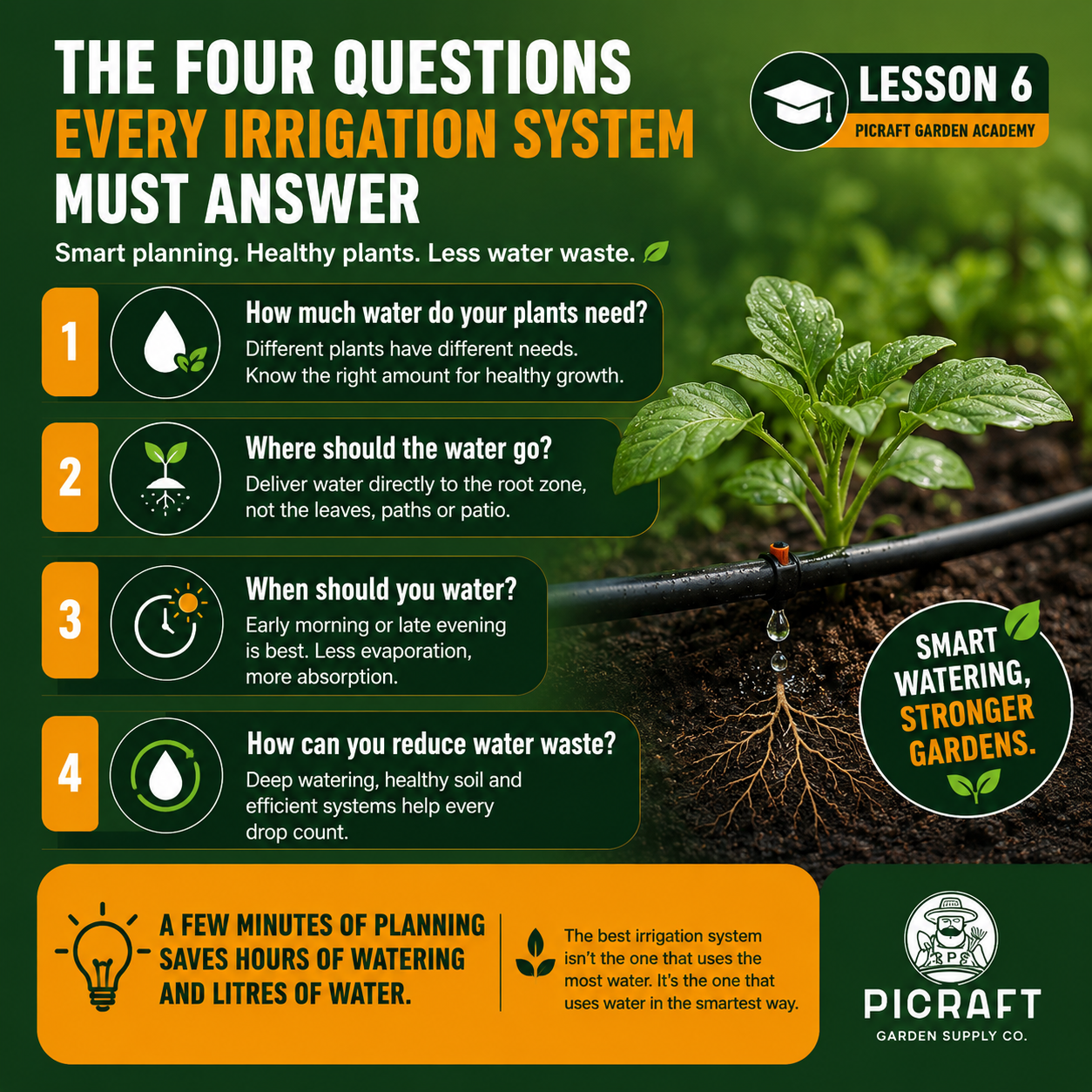
Whether you're watering a small vegetable garden, raised beds, flower borders or an entire landscape, every irrigation system should answer the same four essential questions.
Get these right, and your plants will be healthier, your water bills lower and your irrigation system far more efficient.
1. How Much Water Do Your Plants Need?
Not all plants require the same amount of water.
Understanding your plants' needs is the first step towards efficient irrigation.
For example:
-
Vegetables generally require regular, consistent watering.
-
Newly planted shrubs need more water than established ones.
-
Mediterranean plants such as lavender prefer drier conditions.
-
Lawns often require different watering schedules than flower beds.
Applying the same amount of water to every part of your garden usually leads to overwatering some plants while underwatering others.
A well-designed irrigation system provides each planting area with the amount of water it actually needs.
2. Where Should the Water Be Delivered?
Water should always be delivered where plants can actually use it.
That means the root zone, not the leaves, paths or patio.
Many gardeners waste large amounts of water by spraying entire plants when only the soil around the roots needs moisture.
Delivering water directly to the base of each plant offers several advantages:
-
less evaporation
-
healthier root development
-
reduced water waste
-
fewer fungal problems caused by wet foliage
-
more efficient irrigation
This is one of the main reasons why drip irrigation has become so popular for modern gardens.
3. When Should You Water?
Timing has a significant impact on watering efficiency.
The best time to water is usually:
🌅 Early morning
or
🌇 Early evening
During these cooler periods:
-
evaporation is reduced
-
more water reaches the roots
-
plants remain hydrated for longer
-
watering becomes more efficient
Watering during the hottest part of the day often results in unnecessary water loss before the soil has time to absorb it.
4. How Can You Reduce Water Waste?
Every litre of water that evaporates, runs off or lands on paving instead of plants is wasted.
Efficient irrigation is not about using more water.
It's about making every drop count.
Simple ways to reduce water waste include:
-
watering deeply rather than frequently
-
using drip irrigation instead of overhead spraying
-
watering only when plants need it
-
improving soil with organic matter to retain moisture
-
using timers to avoid unnecessary watering
Small improvements can make a significant difference over the course of an entire growing season.
Why Planning Always Comes First
Many irrigation problems begin before the system is even installed.
Common mistakes include:
-
buying the wrong pipe size
-
placing drippers too far apart
-
watering every area equally
-
ignoring soil type
-
failing to divide the garden into watering zones
Taking time to plan your irrigation system helps avoid expensive changes later and ensures every plant receives the right amount of water.
Designing an Efficient Irrigation System
A simple but effective garden irrigation system usually includes:
-
16mm LDPE Mainline Pipe
-
Hose Connector
-
Tee Connectors
-
Elbows
-
Straight Joiners
-
End Plugs
-
Drippers or Spray Misters
-
Optional Garden Tap Timer
Together, these components allow water to be delivered precisely where it is needed while reducing waste and improving plant health.
The Benefits of Asking These Four Questions
Before installing any irrigation system, ask yourself:
✔ How much water do my plants need?
✔ Where should the water go?
✔ When should I water?
✔ How can I reduce water waste?
Answering these questions will help you:
-
create healthier plants
-
encourage stronger root systems
-
lower your water bills
-
save time
-
build a more sustainable garden
The best irrigation systems are not the most complicated.
They are simply the ones that are planned properly.
Key Takeaways
A successful irrigation system is built on planning, not guesswork.
Remember:
-
Different plants need different amounts of water.
-
Always water the root zone.
-
Water at the right time of day.
-
Reduce waste wherever possible.
-
Plan your irrigation system before buying components.
These four simple questions form the foundation of every efficient garden irrigation system.
Frequently Asked Questions
What is the most important part of planning an irrigation system?
Understanding your plants' water requirements and designing the system around those needs.
Why should irrigation water the roots instead of the leaves?
Plants absorb almost all of their water through their roots. Watering the root zone is more efficient and reduces evaporation.
When is the best time to water a garden?
Early morning is generally the most efficient time, although early evening is also suitable in most situations.
How can I reduce water waste in my garden?
Use drip irrigation, water deeply rather than frequently, improve soil moisture retention and avoid watering during the hottest part of the day.
Can I install a garden irrigation system myself?
Yes. Most modern irrigation systems are designed for DIY installation and can easily be expanded as your garden grows.
Continue Learning with Picraft Garden Academy
This article is part of the Picraft Garden Academy, our educational series designed to help gardeners build healthier gardens through smarter irrigation and practical watering advice.