
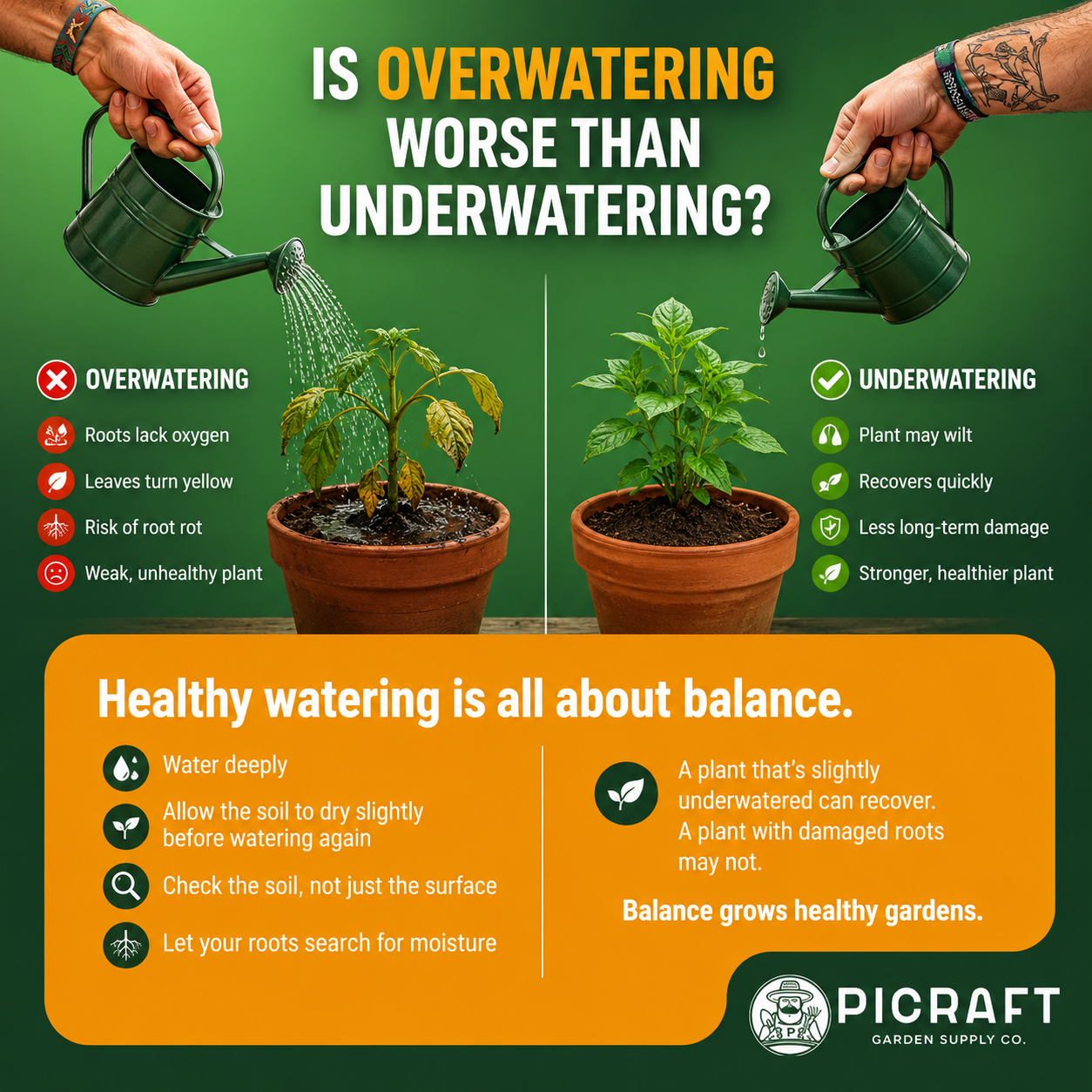
Understanding the Risks of Giving Your Plants Too Much Water
When a plant starts to wilt or its leaves turn yellow, many gardeners instinctively reach for the watering can.
After all, unhealthy plants must need more water… right?
Not always.
In fact, overwatering is one of the most common causes of unhealthy plants, and in many cases, it causes more long-term damage than underwatering.
Understanding how plants respond to excess water can help you avoid root problems, improve plant health and create a more efficient watering routine.
Do Plants Need Constantly Wet Soil?
No.
Plants need two essential things below the soil surface:
-
Water
-
Oxygen
Many gardeners focus only on the first.
Healthy roots require oxygen to function properly. Tiny air pockets naturally exist within the soil, allowing roots to breathe while absorbing water and nutrients.
When the soil remains constantly saturated, these air pockets fill with water, reducing the oxygen available to the roots.
Without oxygen, roots become stressed, weakened and eventually begin to die.
What Happens When You Overwater?
Overwatering doesn't simply mean giving a plant too much water at once.
More often, it means watering too frequently and never allowing the soil to dry slightly between watering sessions.
Over time this can lead to:
-
oxygen starvation in the root zone
-
weak root development
-
yellowing leaves
-
slow plant growth
-
fungal diseases
-
root rot
-
increased pest problems
Ironically, plants suffering from overwatering often display the same symptoms as underwatered plants.
This leads many gardeners to add even more water, making the problem worse.
Why Underwatering Is Often Easier to Fix
A plant that has received too little water will usually wilt as a way of conserving moisture.
If caught early, most plants recover quickly after a deep watering.
Their roots remain healthy and are still able to absorb water once it becomes available.
An overwatered plant faces a much bigger challenge.
If the roots have been damaged or affected by rot, they may no longer be able to absorb water efficiently—even when the soil is wet.
This is why recovery from overwatering often takes much longer.
Signs of Overwatering
Watch for these common warning signs:
-
Yellow leaves
-
Soft or limp stems
-
Constantly wet soil
-
Poor growth
-
Leaves falling despite moist soil
-
Green algae or moss on the soil surface
-
A sour smell coming from the compost or garden bed
These symptoms often indicate that the root system is receiving too much water and not enough oxygen.
Signs of Underwatering
Underwatered plants usually show different symptoms:
-
Dry soil several centimetres below the surface
-
Wilting during hot weather
-
Crispy leaf edges
-
Slow growth
-
Drooping leaves that recover after watering
Unlike overwatering, these problems can often be corrected quickly by restoring proper soil moisture.
How to Avoid Overwatering
The good news is that preventing overwatering is simple.
Follow these best practices:
Check the Soil Before Watering
Don't rely on appearances alone.
Insert your finger a few centimetres into the soil.
If it still feels moist below the surface, your plants may not need watering yet.
Water Deeply, Then Wait
Instead of watering every day, apply enough water to soak the root zone.
Then allow the upper layer of soil to begin drying before watering again.
This encourages stronger roots and improves drought resistance.
Water the Soil, Not the Leaves
Direct water towards the base of the plant where roots can absorb it efficiently.
This also helps reduce evaporation and unnecessary moisture on foliage.
Improve Drainage
Heavy clay soils hold water for much longer than sandy soils.
If water remains on the surface after rainfall or irrigation, consider improving drainage with organic matter or raised beds.
How Drip Irrigation Helps Prevent Overwatering
One of the biggest advantages of a drip irrigation system is control.
Instead of flooding an entire garden bed, drip irrigation delivers water slowly and precisely to the root zone.
Benefits include:
-
consistent soil moisture
-
less water waste
-
improved oxygen availability
-
healthier root systems
-
easier scheduling with irrigation timers
Using a 16mm LDPE mainline irrigation pipe combined with drippers allows gardeners to apply the right amount of water exactly where it's needed.
Healthy Watering Is About Balance
Successful gardening isn't about keeping the soil permanently wet.
It's about maintaining the right balance between moisture and oxygen.
Healthy roots need both.
By allowing the soil to dry slightly between watering sessions, you create an environment where roots can breathe, grow and support stronger, healthier plants.
Key Takeaways
If you're unsure whether to water again, remember:
-
Too much water can be more harmful than too little.
-
Healthy roots need oxygen as well as moisture.
-
Water deeply rather than frequently.
-
Always check the soil before watering.
-
Drip irrigation helps deliver consistent moisture without oversaturating the soil.
In most gardens, smart watering is far more important than simply watering more often.
Frequently Asked Questions
Can overwatering kill plants?
Yes. Prolonged overwatering can damage roots, reduce oxygen levels in the soil and lead to root rot, which may eventually kill the plant.
Is underwatering easier to fix?
In many cases, yes. Plants with healthy roots often recover quickly after a thorough watering, while damaged roots caused by overwatering may take much longer to recover.
How can I tell if my plant is overwatered?
Common signs include yellow leaves, constantly wet soil, poor growth, soft stems and leaves dropping even though the soil is moist.
How often should I water my garden?
There is no universal schedule. Water when the soil begins to dry below the surface rather than following a fixed daily routine.
Does drip irrigation help prevent overwatering?
Yes. Drip irrigation applies water slowly and directly to the root zone, making it easier to maintain consistent soil moisture without flooding the soil.
Continue Learning with Picraft Garden Academy
This article is part of the Picraft Garden Academy, our educational series designed to help gardeners improve plant health through smarter irrigation and practical watering advice.